

Solar Energy Group
Solar Energy Group
“Our goal is to build sustainable energy technologies through reliable characterisation and innovative materials.”

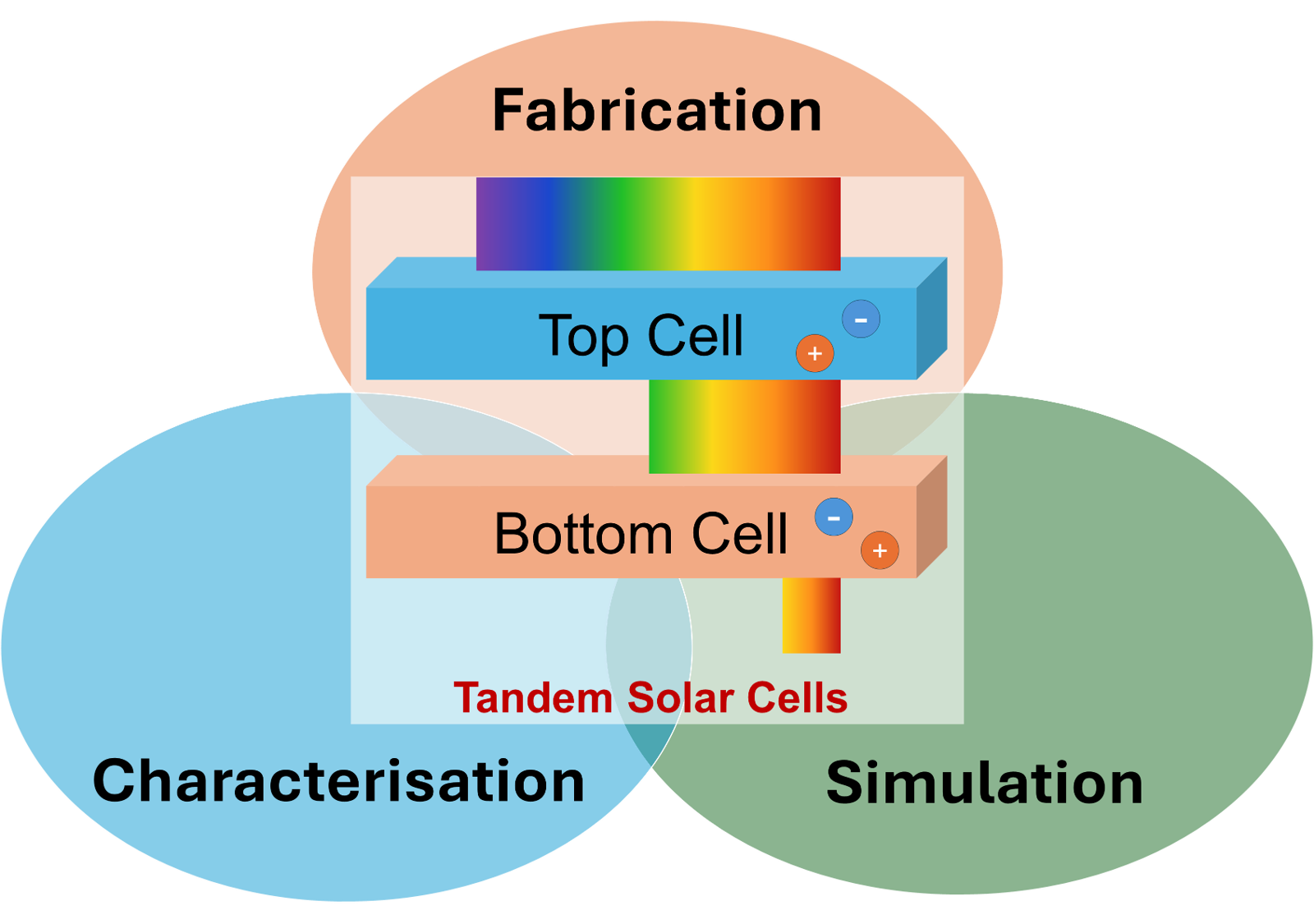
The team develops functional thin films for high-efficiency photovoltaics and electronic devices. Using ALD, plasma deposition, we can achieve atomic-level control of structure and chemistry for defect passivation, band-alignment tuning, and mechanical flexibility. These materials enable breakthroughs in perovskite/silicon tandem cells and next-generation flexible electronics.
Reliable and repeatable characterisation is fundamental to scientific progress. Our team develops advanced experimental and analytical methods to probe interfacial physics with high precision and reproducibility. Our work includes in situ diagnostics of charge dynamics, surface-potential mapping, and cross-lab standardisation protocols.
To enable practical deployment, our team aim to develop a multiscale simulation and validation framework that integrates every level — from materials and devices to complete energy systems. By linking electronic and structural data from material characterisation with device-level performance models and energy-yield simulations under real-world conditions, this approach provides actionable insights into operational behaviour. The framework supports manufacturers and system engineers in predicting efficiency, optimising process parameters, and verifying long-term reliability during design and production. By creating a closed feedback loop between simulation and field data, the team bridges the gap between laboratory innovation and stable, scalable solar performance in the real world.

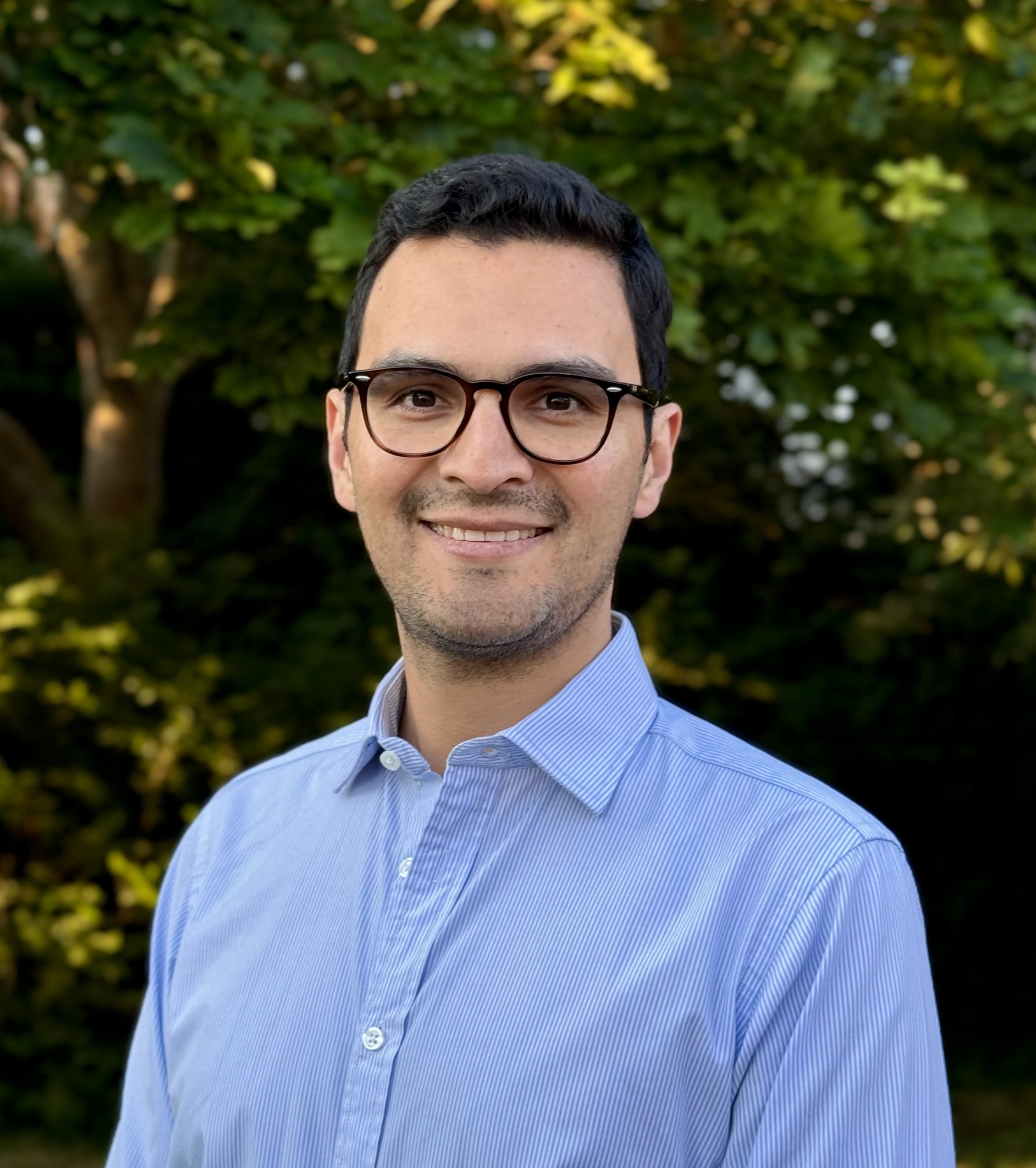
Prof Ruy Sebastian Bonilla
sebastian.bonilla@materials.ox.ac.uk
Associate Professor of Materials, University of Oxford
Fellow of St Anne's College
Professor Bonilla’s research (Google Scholar) focuses on advanced interface engineering and thin-film materials for high-efficiency photovoltaic and electronic devices. His group in Oxford (Interface & Electronic Materials Laboratory) investigates the physics and chemistry of electronic–material interfaces, developing new methods to improve reliability, manufacturability, and long-term performance in solar and optoelectronic systems. In OSCAR, the research emphasises work that is close to industrial application, with clear routes toward commercialisation. Current efforts target the development and scale-up of advanced thin film materials for next-generation silicon/perovskite tandem solar cells, as well as inline diagnostic tools and multiscale modelling frameworks that enable real-time process optimisation. These activities directly support the global transition to affordable, reliable renewable-energy technologies, with impact extending across photovoltaics, flexible electronics, and sustainable manufacturing.


Dr. Xinya Niu
Research Scientist
Xinya (Google Scholar) received her Bachelor’s degree from the University of Chinese Academy of Sciences, and her PhD from the Department of Materials at University of Oxford under the supervision of Professor Sebastian Bonilla. Her doctoral research focused on interface physics in silicon solar cells and two-dimensional semiconductor field-effect transistors. Trained as a materials scientist, she has broad expertise in thin-film fabrication and characterisation, device processing, and multiscale simulation, bridging fundamental materials research with practical device engineering for next-generation energy technologies.
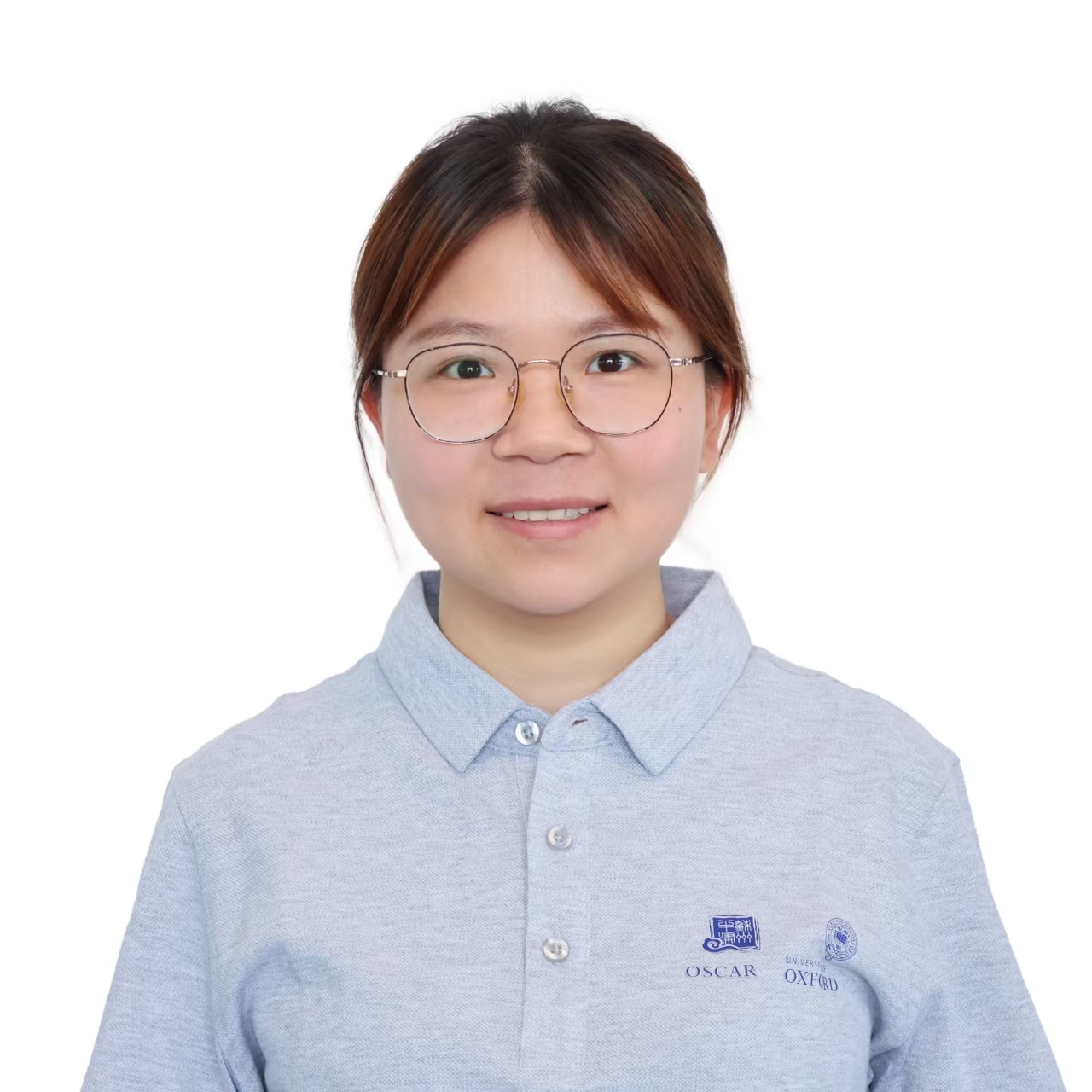
Yuanyuan Cheng
Research Technician
Yuanyuan possesses extensive R&D experience in the industrial sector, having played an integral role in the process technology development of both second- and third-generation solar cells. This has allowed her to accumulate profound expertise in thin-film fabrication for solar cells. Her core work focuses on employing vacuum deposition techniques to fabricate and systematically characterise interfacial nanolayers between crystalline silicon and perovskite solar cells.

